
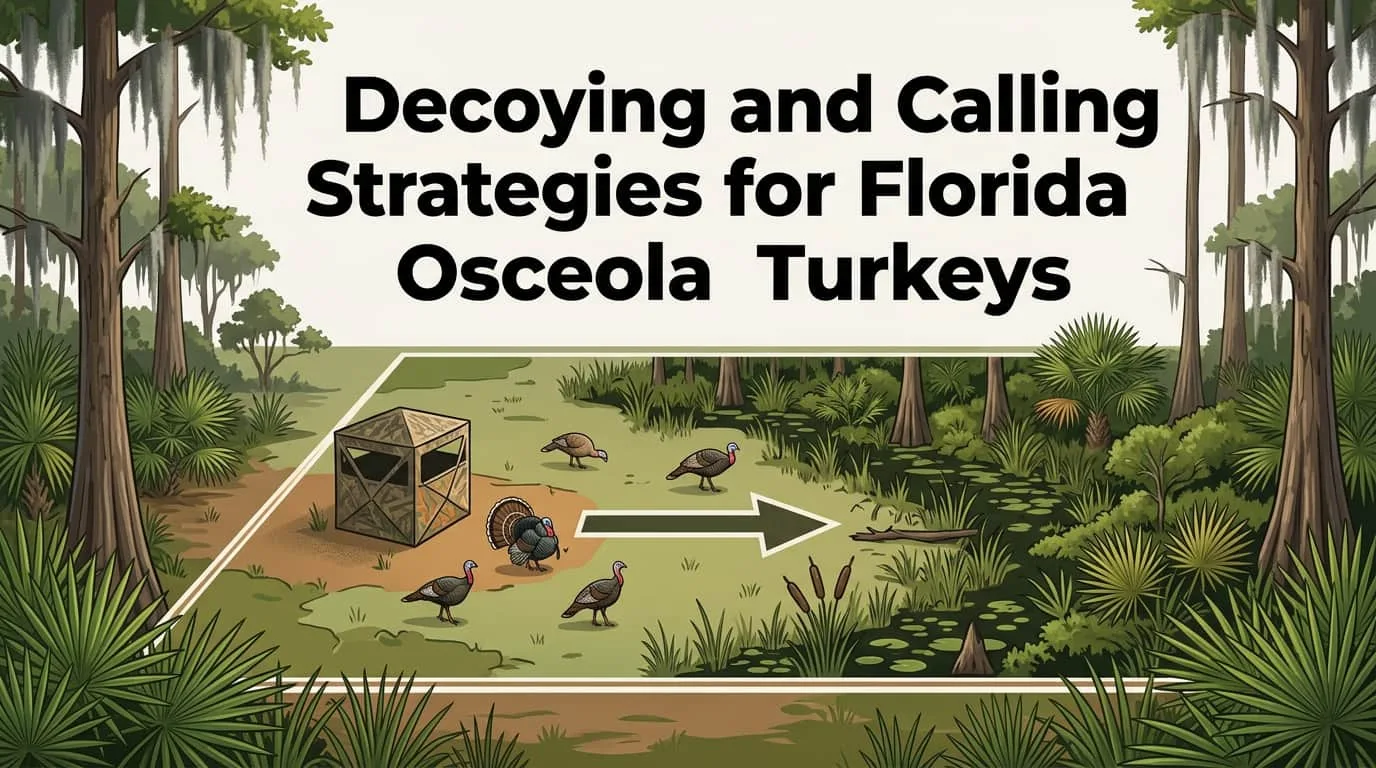
Chasing the Florida Osceola turkey is the ultimate test for hunters looking to complete their prestigious Grand Slam. These wary birds hide deep within the swamps and palmetto flats of Central Florida, requiring highly advanced tactics to bring them into range. If you want to punch your tag this spring, you require flawless decoying and calling strategies.
Ready to book your hunt? Contact Switchgrass Outfitters at (321) 900-2494 to secure your spot.
Understanding Osceola Behavior and Habitat
Florida Osceola turkeys breed earlier than other subspecies, typically starting their mating cycle in late February. They prefer roosting in large cypress trees over water near the St. John's River before pitching down into open cattle pastures or oak hammocks to feed. Knowing these daily travel routes is your key to success.
Tourists visiting areas like Lake Nona or Christmas quickly learn these birds are notoriously quiet. They gobble far less frequently than Eastern turkeys. Their habitat is dense, wet, and unforgiving. While scouting these marshy roosts, many visiting hunters book airboat rides Central Florida, Florida to understand the massive layout of the wetlands. Getting eyes on the terrain from the water gives you a distinct tactical advantage.
Decoying Strategies for Osceola Turkeys
Place your turkey decoys 15 to 20 yards from your setup in open fields or wooded edges. Use a single feeding hen decoy early in the season. Introduce a jake or strutting gobbler decoy only when you know a dominant tom is actively defending his territory.
Osceolas are incredibly suspicious birds. Using full-strut decoys often scares off subordinate or pressured gobblers. Stick to a 90 percent hen and 10 percent jake ratio for your decoy setups. In our years guiding hunts at Switchgrass Outfitters, we've learned that a minimalist approach works best. A lone hen decoy communicates safety and food without challenging a gobbler's dominance.
Proximity to the roost matters. Keep your setups tight to their travel corridors. Observing flocks from the water during airboat rides Central Florida, Florida shows exactly how these birds use transition zones between the deep swamp and dry feeding grounds. Common mistakes include setting up too close to the roost tree or using too many decoys in a tight clearing.
Calling Strategies for Florida Osceola Turkeys
Call sparingly when hunting Florida Osceola turkeys. Use soft yelps, clucks, and purrs on a slate or diaphragm call to mimic a relaxed hen. Over-calling will almost always cause a wary Osceola gobbler to freeze or silently circle downwind of your position.
The thick Florida vegetation absorbs sound rapidly. Box calls work beautifully for long-range locating first thing in the morning. Switch to a slate or glass call once the bird closes within 100 yards. If you get a response, go completely silent for 15 to 20 minutes. Make the tom come looking for you.
Advanced calling requires reading the bird's mood. If a dominant gobbler answers every yelp aggressively, you can cut him off with sharp, aggressive calling. If he responds once and goes quiet, he is likely working his way toward you silently. Drop your volume and wait.
Integrating Decoys and Calls
Synchronize your calls with your decoy placement by facing the decoy toward your blind. When the gobbler approaches, he will naturally try to walk in front of the decoy, putting him perfectly in your shooting lane at 25 yards.
You must adapt your strategy to the local weather. On windy days pushing off the coast, increase your call volume by 30 percent so the sound carries. On dead-calm Florida mornings, whisper on your calls. The birds can pinpoint sound with scary accuracy. If the action dies down, take a break. Families often enjoy airboat rides Central Florida, Florida, during the midday lull when the turkeys bed down in the shade. Return to the woods around 3:00 PM to catch them moving back toward their roosts.
Essential Gear and Preparation
Pack lightweight, breathable camouflage specifically designed for Florida's vibrant green, swampy environment. You absolutely need a Thermacell or strict scent control to handle the heavy mosquito populations found in the thick palmetto flats along the Econlockhatchee River during spring.
Do not wear standard brown fall camo. You will stick out like a sore thumb against the lush spring foliage. Bring a comfortable seat cushion and a high-quality face mask. You might sit completely still for 4 to 5 hours waiting out a stubborn tom. Understand all local regulations before you sit down. Florida requires specific licenses and strictly limits hunting hours on public management areas.
Ethical Hunting Practices and Conservation
Responsible Osceola turkey hunting requires strict adherence to Florida's bag limits and seasonal dates. Always take clean, ethical shots within 40 yards to ensure quick kills. Support local conservation groups working to protect these unique wetland habitats.
We respect the land and the wildlife we pursue. Osceola turkeys face habitat loss from rapid development across the state. Ethical hunters fund conservation through license sales and equipment taxes. By hunting responsibly, you ensure future generations get to experience the thrill of hearing a swamp gobbler sound off at dawn.
The Bottom Line on Osceola Hunting
Bagging an Osceola requires elite patience, perfect decoy placement, and subtle calling. Prepare for the heat, trust your setup, and let the birds dictate the action.
If you want to complete your Grand Slam this season, you need local expertise. Contact Switchgrass Outfitters at (321) 900-2494 to book your guided hunt today.