
One of the most common questions before an airboat tour is a simple one: what am I actually going to see out there? The honest answer for the St. Johns River is more than most people expect, and different from what most people picture when they think of Florida. Book your tour with Switchgrass Outfitters or call (321) 900-2494 to ask what is showing during your travel dates.
How many alligators will you actually see on a typical tour?
The St. Johns River stretch that Switchgrass Outfitters covers has not had active gator hunting since the 1960s. That history matters because it means this population of alligators has had more than half a century to establish itself without significant human pressure. Guests typically see hundreds of alligators over the course of a tour, sometimes approaching the thousands depending on the season and conditions. They are not a rare sighting to hope for. They are part of the continuous landscape from the moment the boat pushes off.
Different seasons offer different behavior. Spring mating season means more movement and activity. Summer egg-laying season means gators are found near their nesting sites and swimming to stay cool. A cooler fall morning might have gators spread across open banks soaking in the early sun. The trip to see alligators on the St. Johns River is not about whether you will see them. It is about what they will be doing when you do.
What birds can guests expect to spot along the route?
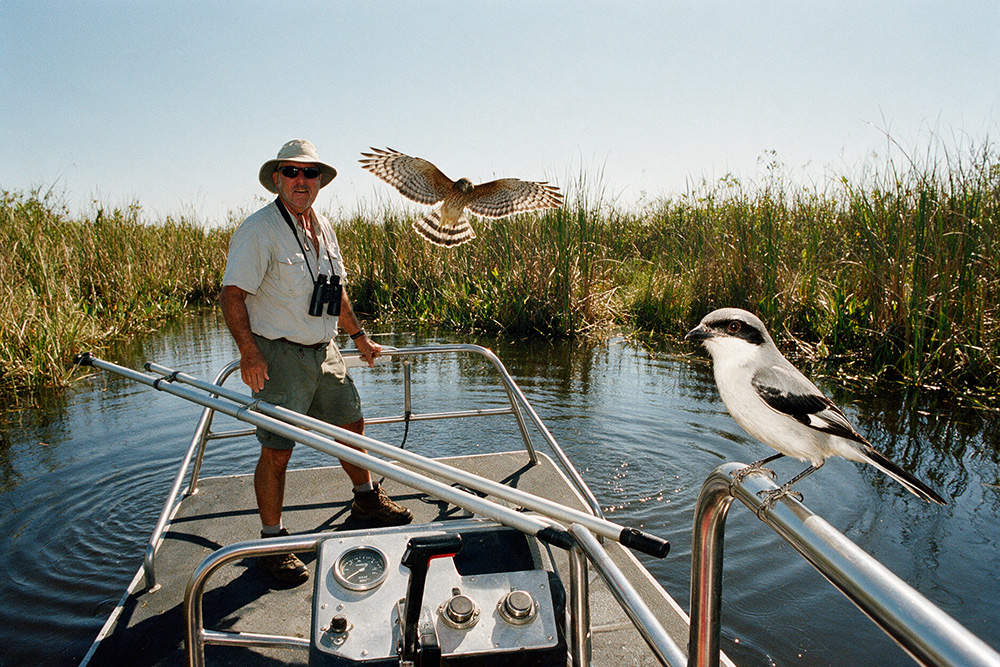
The bird life along this stretch of the St. Johns is substantial and genuinely diverse. On most tours, guests spot Bald Eagles working the shoreline and perching in the old cypress canopy. Blue Herons stand motionless in the shallows, hunting. Roseate Spoonbills, one of the more visually striking birds in Florida, move in groups through the marsh edges. Red-shouldered Hawks, White Ibis, and other wading birds fill in the picture throughout the tour.
These are not background details. Switchgrass Outfitters captains know where these birds typically work during different times of day and different seasons, and the tour route reflects that knowledge. The pace slows when there is something worth stopping for.
What else shows up that guests do not expect?
Several things. The cattle ranches that back up to the river corridor mean cattle are often visible near the water, which surprises almost every first-time visitor. Monarch Butterflies move through in significant numbers during migration. Bat caves along the route come alive at dusk. Gator nests are visible in summer. Old cypress trees, some of them centuries old, rise out of the shallow canals in the mid-tour stretch where the boat slows and moves into the interior.
The plant life contributes as much as the animals to what makes this landscape feel unlike anything in the rest of Florida. Indian Mounds rise from the marsh. Wild Guava, Heart of Palm, and Milkweed line the banks. Depending on the season, Black-eyed Susans and Wild Hibiscus add color across the open areas. Monarch Butterflies gather on the Milkweed during migration season. The captain points all of this out as it comes into view, with the history and natural context that makes it mean something beyond just identifying it.
What does the tour route look like, and where do the best wildlife moments typically happen?
The tour begins in open water with immediate wildlife contact and builds toward the inland cypress canals roughly at the midpoint, which is where the oldest trees and densest concentration of interior wildlife are found. The captain makes three deliberate stops along the route to explain what guests are seeing, answer questions, and let the environment do its work without rushing past it.
For guests who have been on a Switchgrass tour before, the captain takes a different route the second time. There is enough to see along this stretch of the St. Johns that repeat guests experience something genuinely different from their first visit. Contact Switchgrass Outfitters at (321) 900-2494 and ask about what tends to be active during your planned visit dates. The answer changes by month.